

Gross profit and net profit are two key financial metrics that measure a company’s profitability. However, they represent different stages of the profit-making process.
Gross Profit
Gross profit is the revenue a company generates minus the cost of goods sold (COGS). COGS includes the direct costs associated with producing or acquiring the products sold. It measures the profitability of a company’s core operations, excluding overhead expenses.
Net Profit
Net profit is the final profit a company earns after deducting all expenses from its revenue. These expenses include COGS, operating expenses (salaries, rent, utilities), interest, taxes, and other costs. It represents the overall profitability of a company after considering all costs involved in running the business.
Example
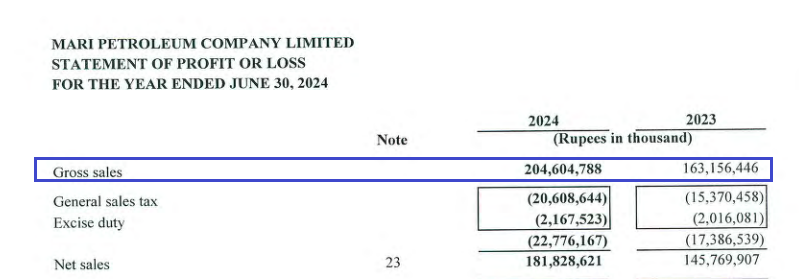
Take this example for instance. This is the financial statement of a leading Oil and Gas Exploration company in Pakistan Mari Petroleum. They just announced their financial results for the year 2024-2025. Check out the figures in the blue border. This is the Gross Profit which is the actual revenue earned by the company for this period.
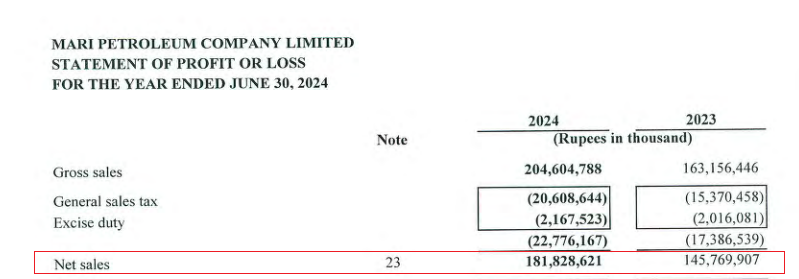
Taking the same example the figures in the red border are the Net Profit for the company. The General Sales Tax (GST) and Excise Duty are subtracted from the Gross Profit and the Net Profit is achieved through this. This is the actual profit of the company after dedcuting the cost of goods which in this case is the GST and the Excise Duty.
If the gross profit and net profit is increasing from the same perid last year / last quarter then you can say that the company profit is increasing.